I’ve got a mission for you.
First, you’ll need your own agent identity. No name, no email, no address — just an icon, a codename and a number only you will know.
Choose your agent.
Pick the agent who feels most like you. You can change your look later.
Your codename.
Every field agent works under a codename. Generate one, then keep it or try another.
D: “You’re in. HQ is ready.”
Name your agent.
Your training record is safe. Every field agent now works under a codename — choose yours.
Welcome to
GrandpaSpy HQ
D is looking for new recruits. Train your observation, codebreaking and deduction skills, earn clearance stamps and unlock classified missions.
Your first missions
Observation
Codebreaking
Deduction
Your next file
Pigpen: The Symbol File
A message has arrived written entirely in symbols. Your next cipher mission is being prepared.
Where do you want to go?
Five places inside HQ. Pick where you want to start.
Your progress
Clearance stamps
INTELLIGENCE TRAINING PROGRAMME
Complete your core training to earn your first clearance.
NO GPS
THE SHIFTED MESSAGE
First: learn the cipher
A Caesar cipher hides a message by moving every letter the same number of places around the alphabet.
If the shift is +3, A becomes D, B becomes E and C becomes F. To decode it, you move every letter back 3 places.
D: “The important thing is the rule. Once you find the shift, every letter follows it.”
ONE ALPHABET. TWO RINGS.
Imagine two alphabets on top of each other. The outside alphabet is the normal one. Turn the inside alphabet and every letter gets a new partner.
INTERCEPT 01
Move the wheel until the coded letters become a message that makes sense.
THREE INTERCEPTS CRACKED
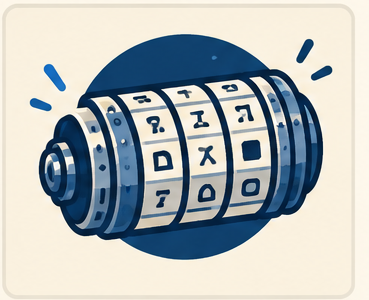 FILE CLEARED
“Different messages. Different shifts. Same principle: find the rule, then apply it carefully.”
CHOOSE YOUR DIVISION
Different rooms train different instincts. Enter a room, open a file and put your skills to work.
CIPHER ROOM
Learn the system in Training. Use it here under mission conditions.
Cipher missions
The Shifted Message
Build Your Own Wheel
Pigpen: The Symbol File
Atbash: The Mirror Alphabet
Number Code: File 26
The Mirror File
Real-world systems such as Morse, Braille, Semaphore and the NATO phonetic alphabet remain in the Training Division. Mission Rooms are where you use those skills.
D's Cipher Challenge
OBSERVATION ROOM
Notice first. Decide later. Clear the room files to reach D's Observation Lock Box.
The Station File
Fingerprint: The Glass File
Hidden Detail
Airport Sweep
The Altered Desk
Pattern Intercept
D's Observation Challenge
DEDUCTION ROOM
Follow what the evidence allows. Never guess.
The Missing Case
Suspect Sweep
The Map Drawer Mystery
Operation: The Vanishing Blueprint
FIELDCRAFT ROOM
Routes, movement, maps and operational choices.
Map Coordinates
D'S CLASSIFIED ROOM
These files combine several skills. The answer is rarely written down for you.
Operation Nightfall
THE BLACK FILE
D has removed the labels
Three intercepted fragments use systems you've already trained on. This time, nobody tells you which cipher to use.
Solve each fragment. One answer becomes the key to the next. Keep your evidence.
D: “Knowing a cipher is useful. Recognising which one you're looking at is the real test.”
15-16-5-14 19-9-24
No cipher label. Which trained system should you use?
15-16-5-14 19-9-24
THE SHIFT IS HIDDEN IN THE FIRST ANSWER
D has given you a Caesar intercept. The first fragment told you the shift.
Move every letter back 6.
ONE LAST UNLABELLED INTERCEPT
This message isn't a number code and there is no shift to find. Recognise the alphabet rule.
THREE LOCK BOXES. ONE CORRECT CHOICE.
Your evidence says OPEN SIX, THE KEY IS RED, and BLACK. Which box satisfies all three clues?
CIPHER CLEARANCE GRANTED
“You didn't just decode the messages. You recognised the systems, carried evidence forward and used it to make the final decision.”
FINGERPRINT: THE GLASS FILE
A print has been recovered
A drinking glass was left in a secure briefing room. One clear fingerprint was recovered from it.
You have four comparison prints. Your job is not to guess from the overall shape. Look for small ridge details that appear in the same places.
D: “A good comparison is built from several matching details, not one thing that looks similar.”
THREE USEFUL RIDGE DETAILS
For this training file, compare these three features. The diagrams are fictional training prints, not real fingerprints.
Which detail is a ridge splitting into two?
PRINT FROM THE GLASS
Study the recovered print. The scanner has marked three comparison points. Remember where A, B and C sit within the ridge pattern.
WHICH PRINT MATCHES?
Use the three cyan markers as your comparison points. Look closely at the ridges beneath each marker, then select the print where all three details match the evidence.
WHAT HAVE YOU ACTUALLY PROVED?
Print D matches the fingerprint recovered from the glass. Choose the conclusion the evidence really supports.
THE GLASS FILE CLEARED
“Evidence tells you what it proves. A fingerprint can place a hand on a glass. It cannot tell you the whole story.”
HIDDEN DETAIL
Don't decide too quickly
A station camera has captured what looks like a suspicious bag handover.
Your first job is simply to observe. You will have 12 seconds to study the whole frame before D asks what you noticed.
D: “The first story your brain tells you is not always the right one.”
STUDY THE WHOLE FRAME
Do not just watch the two people in the centre. Scan signs, reflections, clothing and the background.

WHAT DOES THE SCENE APPEAR TO SHOW?
This question is about your first impression, not the final judgement.
WHICH DETAIL SHOULD MAKE YOU PAUSE?
One detail in the image makes the obvious story much less certain.
WHAT CAN YOU SAFELY CONCLUDE?
HIDDEN DETAIL CLEARED
“Good observation is not just seeing more. It is knowing when one detail should change your judgement.”
AIRPORT SWEEP
The Departure Lounge
Agent, we have a short window before boarding closes. Somewhere in this terminal are ten details linked to our case.
Search the whole scene. Tap each piece of evidence when you find it. There is no timer and no penalty for checking carefully.
D: “Don't stare at the obvious. Let your eyes travel.”
FIND 10 PIECES OF EVIDENCE
Scan foreground, seating, luggage and the edges of the frame. Found objects stay marked so you can concentrate on what remains.

DEPARTURE LOUNGE CLEARED
Good. You didn't just look at the scene. You searched it properly. But one detail matters more than the rest: the railway ticket. It tells us the trail doesn't end at the airport.
“Finding everything is useful. Knowing which detail matters is the real skill.”
THE ALTERED DESK
The Suspect's Desk
Agent, study this intelligence desk carefully. You have 30 seconds to remember where things are and what they look like.
When the scene returns, three details will have changed. Find all three, then decide which change actually matters.
D: “Don't try to remember everything at once. Build a picture of the room.”
MEMORISE THE DESK
Look at positions, colours and whether things are open or closed.
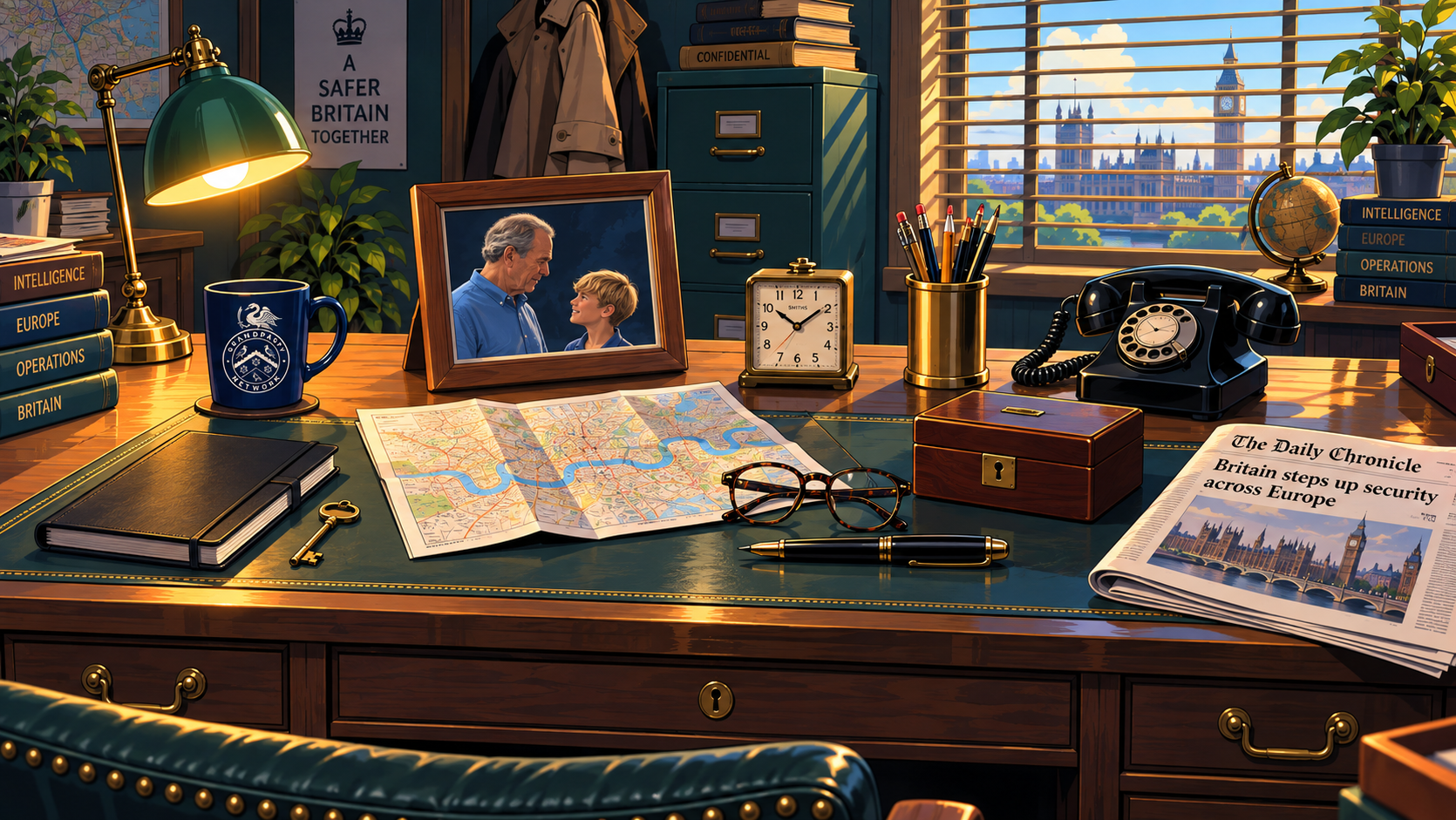
Stand by for the second image…
FIND THE 3 CHANGES
Tap the three things that are different from the desk you studied.
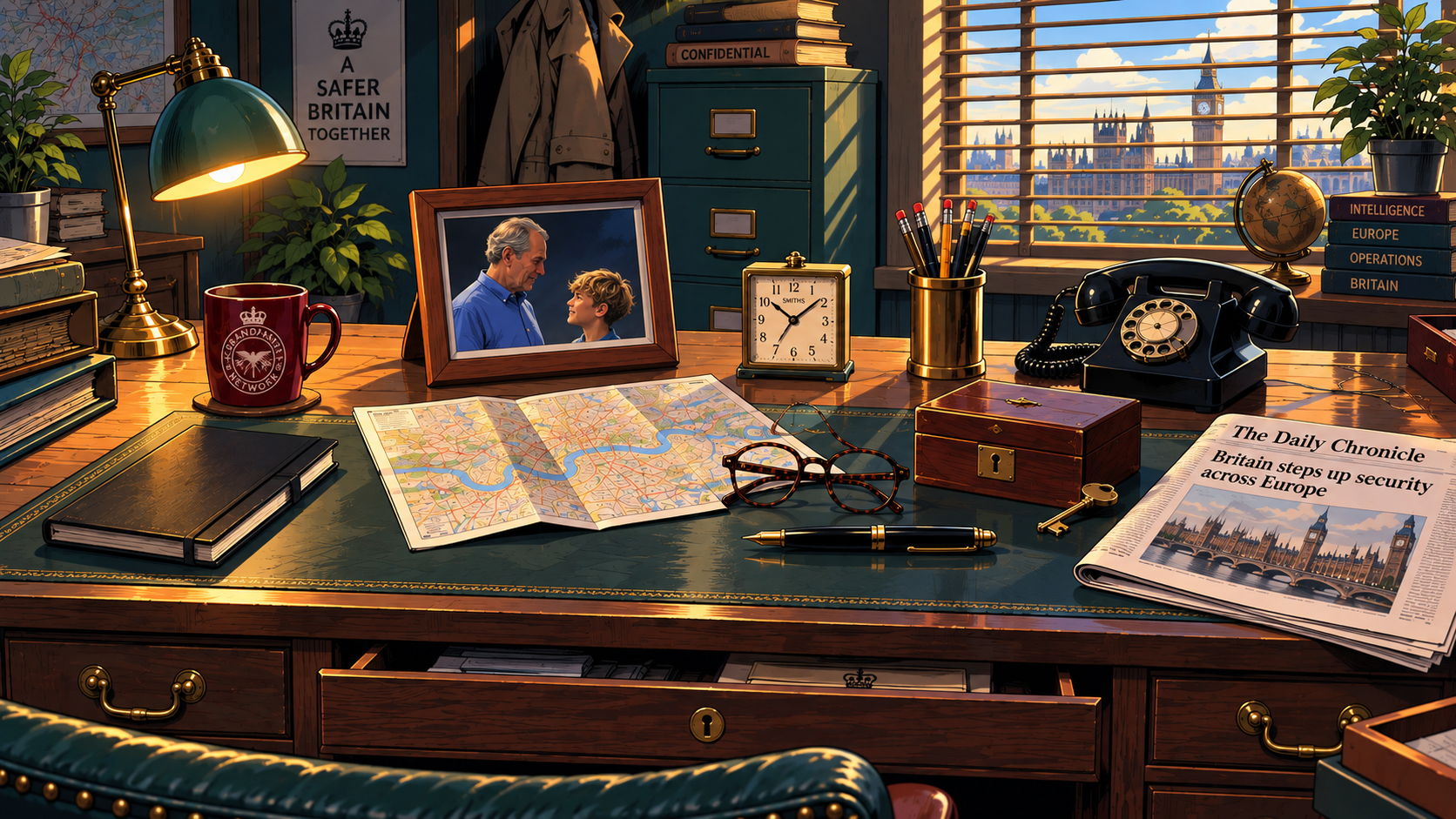
Don't search randomly. Rebuild the first image in your head.
WHICH CHANGE MATTERS MOST?
You found all three. Now decide which change gives us the most useful intelligence.
ALTERED DESK CLEARED
“Memory helps you notice what changed. Judgement tells you why it matters.”
The key moving beside the lockbox is the most useful change. It suggests someone may have been preparing to open it. It does not prove that they did.
PATTERN INTERCEPT
The window signals
Agent, we've been watching a window across the street. The signals aren't random. Someone is following a pattern.
Your job is to spot the rules, catch a false signal, predict what comes next, then combine several patterns in one final intercept.
D: “A pattern is useful only if you can use it to predict what might happen next.”
WHAT COMES NEXT?
Watch the order carefully.
USE EVERYTHING YOU'VE LEARNED
This transmission uses three patterns at once: time, location and signal colour. Work out the complete next transmission.
Which complete transmission should come next?
INTERCEPT DECODED
“Spot the rule. Test it. Then use it. That's how patterns become intelligence.”
You tracked three rules at once. The pattern predicts this transmission, but a prediction is still not a certainty.
THE MIRROR FILE
A message hiding in plain sight
A note has been recovered from an intelligence desk. The writing looks wrong, but no letters have been substituted.
Work out how it was written, recover the instruction, then prove you can read a second mirror message yourself.
D: “Before you try to crack a code, make sure it actually is one.”
WHAT HAS BEEN DONE TO THE MESSAGE?
Look at the shapes of the letters, not just their order.
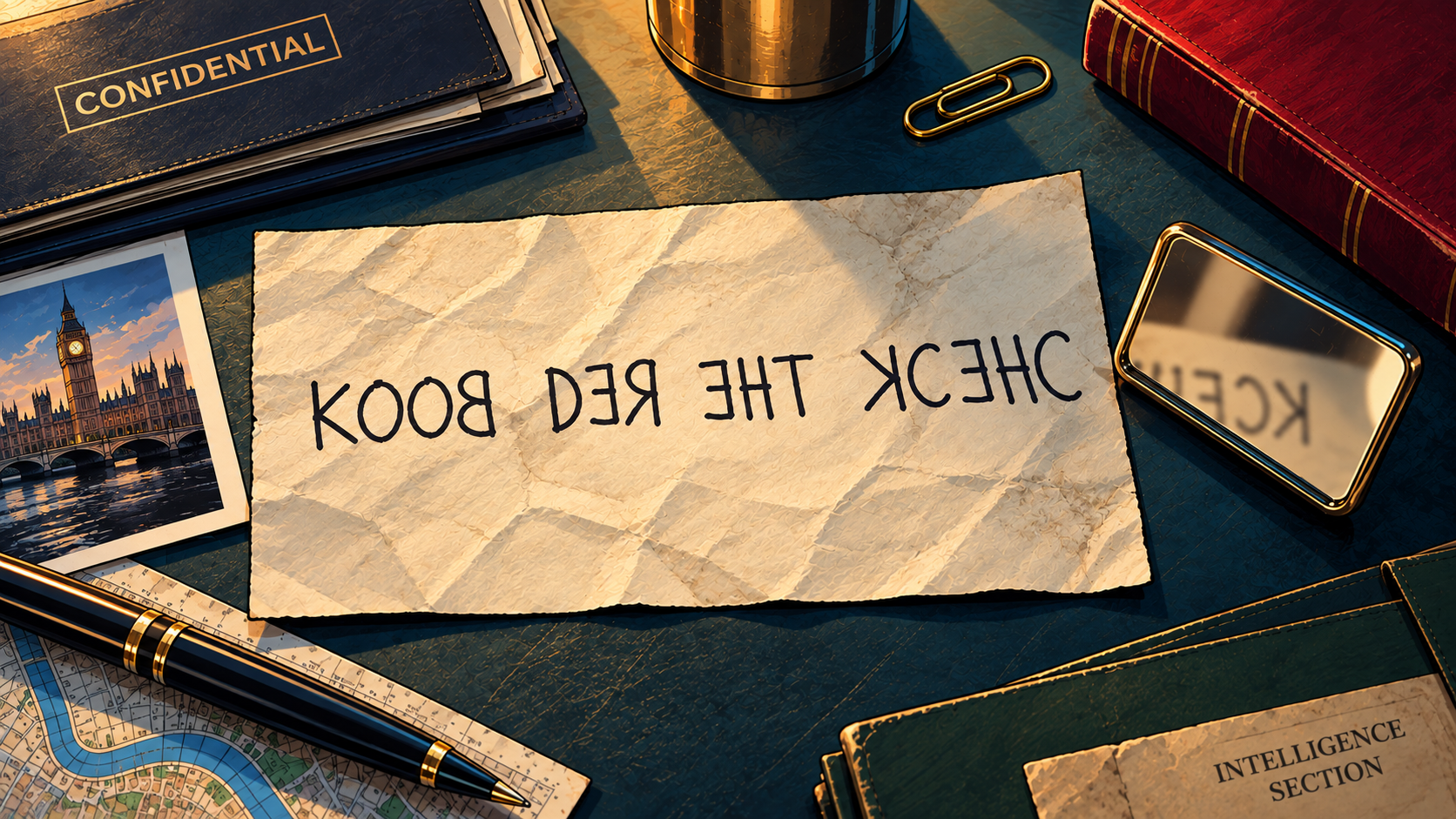
USE THE MIRROR
Activate the mirror and read the recovered instruction.
WHICH OBJECT DO YOU EXAMINE?
The message is useful only if you act on it correctly.
NO MIRROR THIS TIME
You've learned the trick. Read this shorter message without activating the evidence mirror.
MIRROR FILE CLEARED
FILE CLEARED“Sometimes the information isn't hidden. You're simply looking at it the wrong way.”
NUMBER CODE: FILE 26
The archive index has been coded
A classified archive instruction has been rewritten entirely as numbers.
The system is simple: A = 1, B = 2, C = 3... all the way to Z = 26.
D: “Simple systems can still hide useful information. Spot the rule before you start guessing.”
A = 1 // Z = 26
Each number points to one letter's position in the alphabet.
Which letter is 19?
THREE NUMBER STRINGS
Decode each fragment. Together they describe the object you need to find.
ARCHIVE SHELF B
Decode the complete instruction, then identify which numbered file matches it.
FILE 26 IDENTIFIED
FILE CLEARED“You didn't need a complicated code. You needed a reliable rule and careful checking.”
ATBASH: THE MIRROR ALPHABET
The alphabet has been turned around
A security file contains a codename that makes no sense. The letters were encoded using Atbash.
Atbash does not use a shift number. It simply pairs the alphabet with itself backwards.
D: “A good codebreaker asks what has changed. Here, the alphabet hasn't moved. It's been reversed.”
THE MIRROR ALPHABET
Read each column vertically. A pairs with Z, B with Y, C with X and so on. The same key encodes and decodes.
If A becomes Z, what does D become?
WHO IS “IZEVM”?
A surveillance note names an agent only as IZEVM. Decode the codename using the mirror alphabet.
FIND THE COMPROMISED AGENT
Three field agents appear in the security log. A final encrypted warning identifies which codename has been compromised.
COMPROMISED AGENT IDENTIFIED
FILE CLEARED“The clever part wasn't reading the code. It was recognising that the rule worked both ways.”
PIGPEN: THE SYMBOL FILE
A code without letters
An intercepted note contains no alphabet at all. Only fragments of grids, corners and dots.
This is a Pigpen cipher. Each letter is replaced by the shape of the space it occupies in a key.
D: “Don't try to remember twenty-six symbols. Understand how the key is built.”
HOW PIGPEN WORKS
The first nine letters use a plain grid. The next nine use the same grid with a dot. The final eight letters use an X-shaped key, again first plain and then dotted.
Which symbol represents M?
M sits in the middle row of the dotted J–R grid.
CRACK THREE WORDS
Use the field key. You can reopen it whenever you need it. No penalty for checking.
THE SYMBOL FILE
The fragments belong together. Decode the complete transmission and select the message D received.
INTERCEPT DECODED
FILE CLEARED“A strange symbol is only strange until you know where to look.”
BUILD YOUR OWN WHEEL
D's workshop
You've used a Caesar wheel. Now you're going to build one.
The outside alphabet stays still. The inside alphabet moves. Turn the inner ring and every outside letter gets a new coded partner.
Then you'll invent a symbol cipher of your own, save it, and use it to make secret messages for friends or family.
D: “Using a system is useful. Understanding how to build one is better.”
LINE UP THE ALPHABETS
Build a Shift +4 wheel. Turn the inside ring until A lines up with E.
ENCODE A WORD
Your wheel is set to Shift +4. Use it to encode:
INVENT YOUR SECRET ALPHABET
Every letter needs its own symbol. Tap any symbol tile to change it. Keep experimenting until the alphabet feels like yours.
MESSAGE + KEY
SYSTEM BUILT
FILE CLEARED“Now you understand both sides of a cipher: how to use one, and how to invent one.”
THE STATION FILE
D's briefing
An agent has been seen at Riverside Central.
You have 20 seconds to study the scene. Look carefully at the people, signs, times and objects.
When the surveillance image disappears, D will ask you three questions.

FILE CLEARED
“Good observation isn't about remembering everything. It's about noticing what matters.”
THE INTERCEPTED MESSAGE
D's briefing
HQ has intercepted a coded message.
The sender used a simple trick: every letter was moved forward by one place in the alphabet.
Move each letter back one place to discover what the message says.
INTERCEPT CLEARED
“Codes are difficult only until you understand the rule.”
THE MISSING CASE
D's briefing
A classified document case has disappeared from Briefing Room 4. Four people were nearby.
Your job is not to guess who took it. Your job is to find whose statement conflicts with the evidence.
Read the records, rule out the people whose stories are supported, then make your deduction.
A person carrying a blue backpack entered the Briefing Room 4 corridor.
One hot chocolate purchased at the ground-floor café.
Maya signed the waiting register outside Conference Room 2.
Leo's security pass recorded him leaving the building.
Sam arrived that morning carrying a blue backpack.
Compare the statements
CASE SOLVED
“Good judgement isn't guessing. It's removing what cannot be true.”
TRAINING COMPLETE. D's First File is now ready for you.
LEARN THE SYSTEMS
AGENTS USE
Real intelligence work uses agreed systems so people can communicate clearly. Train with the phonetic alphabet, Morse, Braille and semaphore. Practice does not affect your clearance, and you can repeat it as often as you like.
NATO phonetic alphabet
Learn how agents spell letters clearly over radio and telephone.
Morse code
Practice the dot-and-dash system you used during Operation Nightfall.
Braille
Discover how six-dot cells can represent letters and words.
Semaphore
Decode letters from flag positions and visual signalling.
NATO PHONETIC ALPHABET
When a radio signal is noisy, saying “B” and “D” can sound almost the same. The phonetic alphabet gives every letter its own clear word.
OPEN PHONETIC FIELD REFERENCE
RADIO READY
D:
“Clear communication matters. If the other person hears the wrong letter,
the whole message can change.”
MORSE CODE
Morse represents letters with short and long signals: dots and dashes. You have already used it in a classified mission. Keep this reference open whenever you want to practise.
OPEN MORSE FIELD REFERENCE
BRAILLE
Braille letters are built from six possible raised dots. Each position has a number. Learn the pattern, then identify the letter in the training cell.
OPEN BRAILLE FIELD REFERENCE
PATTERN READY
D:
“A pattern is information. Train yourself to notice what changes and what stays the same.”
SEMAPHORE
Semaphore sends letters using two flags held at different angles. Instead of hearing a message, you read the position of the signal. Your field reference now contains A–N first, with the rest of the alphabet and the SPACE signal available when you need them.
OPEN SEMAPHORE TRAINING KEY
SIGNAL READY
D:
“Sometimes the message isn't spoken or written. You have to know what you're looking at.”
YOUR FIRST REAL ASSIGNMENT
Operation Nightfall
DON'T GUESS. BUILD THE PICTURE.
THE COURIER BOARD
Study this intelligence board. You have 15 seconds. Remember the details that may matter later.
RADIO MESSAGE RECEIVED
HQ has intercepted a Morse transmission. Use the field reference to decode the meeting point.
OPEN MORSE FIELD REFERENCE
FIND THE INTERCEPTION POINT
You now have two confirmed pieces of intelligence: the courier arrives on Platform 2 and the radio message says GATE FIVE. But Gate 5 is not the interception point. Use the station evidence to work out where the courier must pass.
Choose the point the courier must pass, not simply the place named in the message.
OPERATION NIGHTFALL COMPLETE
“The answer is rarely written on the file. You build it from what the evidence allows.”
You remembered the arrival point, decoded the Morse transmission and worked out the only route that remained possible.
THE DEAD DROP
D's Observation Challenge
Two surveillance photographs were taken in the same station café, four minutes apart. Something happened in between.
This is not a replay. You must remember relationships, identify changes, decide what matters, challenge a timeline and make a safe intelligence judgement.
D: “Don't try to remember everything. Notice what might change the story.”
STUDY THE SCENE
You have 30 seconds. Notice where people and objects are in relation to each other.

FOUR MINUTES LATER
Select the six genuine changes in the second photograph.

WHAT WOULD YOU REPORT?
Not every change matters. Choose the three strongest investigative leads.
ONE STATEMENT DOESN'T FIT
LOOK ONCE MORE
Which new detail could potentially be cross-checked against another record?
WHAT CAN WE SAFELY REPORT?
OBSERVATION ROOM BADGE EARNED
ROOMBADGE EARNEDAGENT
“You didn't just spot what changed. You decided what mattered, challenged what didn't fit and stopped before the evidence ran out. That's observation.”
Your Observation Room badge is permanently recorded in this browser's Agent File.
Who Moved Grandpa's Compass?
Someone moved Grandpa's Cipher Compass from the Cipher Lab. Use the clues to work out who still fits the evidence.
Spy Skill: Rule Out
You'll practise: using clues to eliminate possibilities.
Good detectives do not guess. They use clues to rule out what cannot be true.
Start with the clues, Agent. They will narrow things down.
Read one clue at a time. Tap a person to check whether the clue rules them out. When only one person fits every clue, make your decision.
Choose the person who fits every clue.
SUSPECT SWEEP CLEARED
“Good work. Dev moved the compass to keep it safe. You did not guess—you ruled out what could not be true.”
The Map Drawer Mystery
A city map has gone missing from the Intel Library. Three people described what they saw. Look at the evidence and find the statement that does not fit.
Spy Skill: Check the Evidence
You'll practise: reading for detail and comparing information.
Good detectives check the evidence before they decide what to believe.
A good clue is useful. A good detective checks whether it is true.
Look carefully at the room. Then read each statement. Choose the one that does not match what you can see.
The Map Drawer Mystery
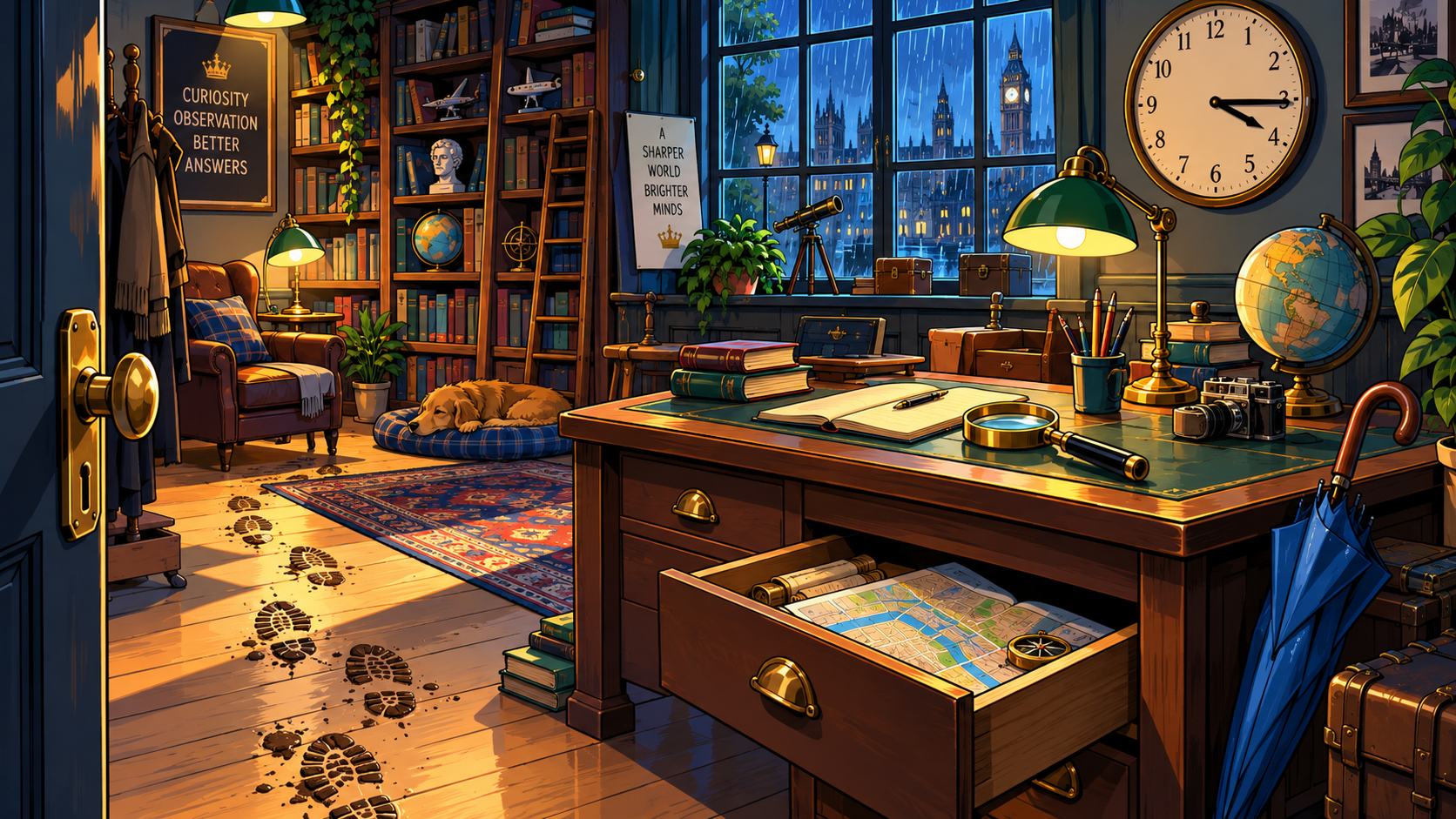
MAP DRAWER MYSTERY CLEARED
“Well spotted. People can remember things differently. Evidence helps us check what fits.”
You compared every statement with what you could see. Taylor's statement did not match the open map drawer.
Operation: The Vanishing Blueprint
Grandpa's new gadget blueprint has disappeared. Use everything you have learned to find it.
Spy Skill: Make the Call
You'll practise: using several clues to explain an answer.
Good detectives do not choose the first answer that sounds right. They follow the evidence until only one answer fits.
Four small discoveries, Agent. Follow each one before you decide.
There are four short stages. Read the clues in each one, then choose an answer. There's no timer, and you can always leave and come back to where you left off.
Who was near the blueprint?
Four people were close to the Cipher Lab. Use the clues to work out who could have moved the blueprint.
Which note does not fit?
HQ found three notes about the blueprint. One does not match the evidence.
Compare the notes
Where was the blueprint left?
The blueprint was moved to a safe place. Use the final route clues to find it.
Choose the safe place
What really happened?
You know who moved the blueprint and where it went. Now choose the explanation that fits every clue.
Make the call
DEDUCTION BADGE UNLOCKED
“You ruled out possibilities, checked the evidence, followed the clues and made the right call. I set this whole case up because I wanted to see whether you would follow the evidence instead of choosing the quickest answer. You did exactly that.”